Article
Your Inner Circle is Probably Smaller Than You Think (And That’s Okay)

Strong workplace connection is not built through volume alone. It is built through depth, trust, and the consistent activation of the relationships that already matter.
In a world of LinkedIn connections, Slack channels, and Instagram followers, it is easy to assume that more reach automatically creates more support. Yet the real opportunity is far more encouraging than that. Building social wealth is not about collecting more people. It is about recognising the value already present in your social ecosystem and learning how to activate it with intention.
For remote leaders and distributed teams, this matters deeply. The quality of your relationships shapes your Social Health, your decision-making, your confidence, and your sense of being resourced in the midst of change.
The truth, backed by five years of applied research with more than 1,200 leaders, is that your inner circle is likely quite small. And here’s the most important part: that is exactly how it is meant to be.
The Reality of the "Inner Circle"
When we talk about an "inner circle", we are not talking about who you follow or who you might grab a quick lunch with. We are talking about the people you feel at ease with. The research calls this personal expression, the freedom to bring your own stories, goals and concerns without a second thought.
Our research at The Communiverse (research) involved deep-diving into the social ecosystems of 1,218 remote and hybrid leaders. This research was conducted in partnership with a financial services organisation, with ethics approval. All findings are reported in aggregate and no participant can be identified. We asked them a simple question: How many people do you feel truly at ease discussing private matters with?
The results were eye-opening. On average, leaders report having:
- 2 to 4 local friends
- 0 to 2 out-of-town friends
- 1 to 4 colleagues
- 2 to 4 relatives
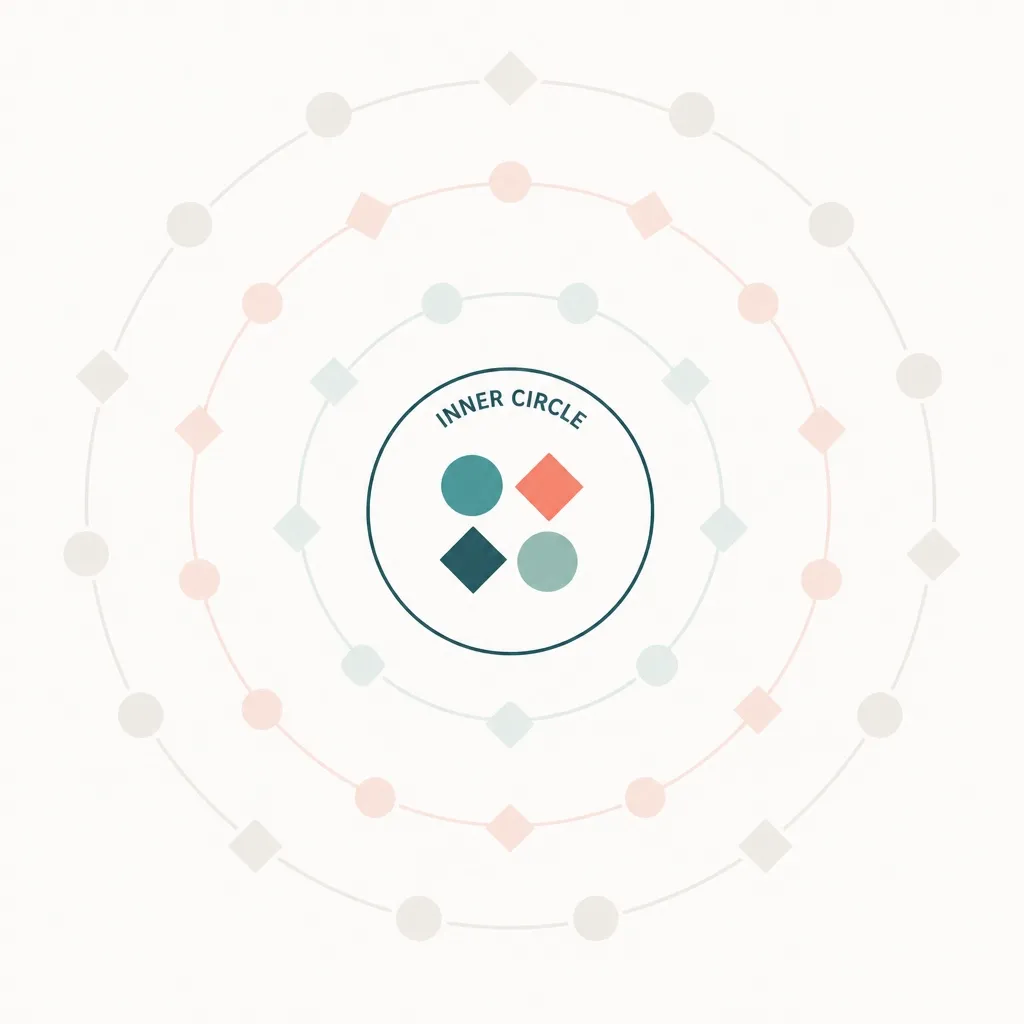
If you add those up, your "true" support system likely consists of fewer than 15 people. For many, it’s even smaller. In a world that often celebrates visible reach, these numbers can seem modest at first glance. But in the world of Social Health, these numbers represent something powerful. They point to your Social Wealth.
Why a Small Circle Can Be a Powerful Advantage
A smaller inner circle is a strength. It is often the most realistic and healthy foundation for meaningful employee social wellbeing and lasting connection.
Our research found that 29% of leaders reported feeling lonely at least sometimes, even among those with high trust and support. That matters, not as a discouraging headline, but as a signal. It tells us that having people around us is only part of the picture. What matters next is whether those relationships are active, mutual, and able to support real life. This is the Activation Gap, the space between having people in your life and feeling seen and held by them.
Not sure where you sit? Take the two-minute Social Wealth Continuum quiz.
So what helps turn a small circle into a source of strength?
1. Use Digital Spaces Intentionally
Our research found that leaders rarely described social media as a space that replenished them. Most described it as habitual, and largely disconnected from the relationships that actually sustained them. Many people scroll to stay informed or stay loosely connected, but that does not always deepen workplace connection or personal support. Digital spaces can be useful, but your inner circle is usually strengthened through direct, meaningful exchange.
2. Strengthen Reciprocity
When we interviewed leaders about what would make their relationships feel stronger, the answer was not more people. It was greater reciprocity.
Many leaders are excellent at being the "supporter". They listen, they mentor, and they hold space for others. The opportunity is to let that same energy flow back to them. They already have the structure of a friendship or a trusted colleague relationship. The next move is to activate it by sharing more of their own internal world.
From Structure to Activation: How to Build Social Wealth
Social Health is not about finding new people. It is about activating the ones you already have. That matters even more now that the World Health Organization recognised social health as the third pillar of public health alongside physical and mental health, in its first report on social connection in 2025.
The structure of your inner circle is the "hardware". Activation is the "software" that makes it run. If you have 3 local friends but never tell them what you are actually navigating at work, you have a valuable resource that has not been fully activated yet.
Here is how you can begin to move from signal to strength and start building social wealth:
1. Identify Your Trusted Circle
Look at the numbers again. Who are the 2 to 4 colleagues or local friends you actually trust? Write their names down. Set the rest of your network aside for a moment. These are the individuals who form the foundation of your Social Health and beyond.
2. Practise "Micro-Sharing"
You do not need to start with something significant. Start by sharing a specific goal, a lingering concern about a project, or a thought you have been sitting on.
Ask yourself: When was the last time I told [Name] about something I am genuinely excited or concerned about?
3. Create Rhythms of Reciprocity
Social health requires rhythm. Instead of "let’s grab coffee sometime", create a ritual.
Actionable rhythm: Block 15 minutes once a month for a "Social Wealth Check-in" with one person from your inner circle. Use this time not just for updates, but for depth.
4. Audit Your Digital Habits
If you find yourself scrolling during your "downtime", ask: Is this replenishing me? If the answer is no, close the app and send a direct text to someone in your inner circle instead. One meaningful text exchange is often far more supportive than an hour of passive scrolling.

Social Health is a Leadership Competency
In our Research briefings and workshops, we teach that social health is not a "soft skill", it is a critical leadership competency.
Leaders who understand their social ecosystem are often more resilient, more resourced, and better equipped to lead distributed teams. They understand that by nurturing their own inner circle, they are building the relational capacity to lead others more effectively. This is one reason remote leadership training and social health capability matter so much in modern organisations.
We often think that as we grow in our careers, our world should get bigger. But the most sustainable leaders often find that as their influence grows, their inner circle becomes more intentional, more focused, and, yes, smaller.
A Question for Your Reflection
You likely already have the "structure" of a supportive inner circle. You have the friends, the family, and the colleagues who care about you.
The question isn’t whether you have enough people. The question is:
Are you actually sharing your stories, your goals, and your concerns with the people who are already there?
Connection isn’t something that happens to us; it’s something we activate.
Further Learning
- Social Wealth Activation: A guided programme to help you design your social ecosystem and sustain your social wellbeing.
- The Social Wealth Continuum: Practical tools for improving Social Health in a distributed world.
- Social Health in Professional Leadership Certification: For leaders ready to embed these frameworks into their company culture.
Two Ways In
- A 60-minute research briefing for your leadership team: Bring one team challenge and leave with a plan.
- A place in the next Social Health in Professional Leadership Certification cohort
Social wealth is not about how many people you know. It is about how many people truly know you.